The Unsung Innovators: Giving Credit to the Forgotten Inventors
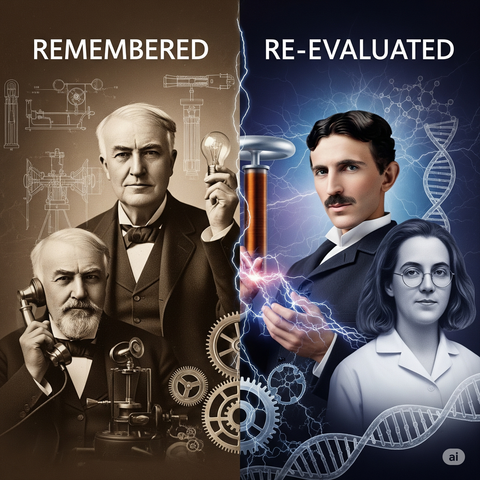
偉大な発明はしばしば、トーマス・エジソンやアレクサンダー・グラハム・ベルのような少数の有名人の功績とされます。しかし、実際にはニコラ・テスラやロザリンド・フランクリンのように、その功績が忘れられた多くの無名な発明家や科学者が存在します。歴史は時に不公平であり、革新は一人ではなく多くの人々の努力によって成し遂げられることを教えてくれます。
When we think of world-changing inventions, we often picture figures like Thomas Edison with the lightbulb or Alexander Graham Bell with the telephone. Yet, behind these famous names are countless other innovators whose contributions were just as vital. Their inventions have shaped our modern world, but their names have been largely forgotten. It is important to look at the stories of these forgotten inventors to understand that innovation is rarely the work of just one person, and that true recognition can often be slow in coming.
One of the most powerful examples of a forgotten inventor is Nikola Tesla. While Edison is often celebrated for his work on electricity, it was Tesla who developed the alternating current (AC) system, which is the very foundation of our modern electrical grid. His ideas were revolutionary, but his fame was overshadowed by Edison's. Today, his name is often associated with science fiction, but his real legacy is in every home that uses electricity. This case reminds us that what gets remembered in history is not always what was most important for the future.
Another great example is Rosalind Franklin. While she didn't invent anything in the typical sense, her work was absolutely essential to one of the biggest discoveries of the 20th century: the structure of DNA. Her X-ray images of DNA were used by James Watson and Francis Crick to create their famous double-helix model. However, she received almost no credit for her work during her lifetime, and the Nobel Prize was given to Watson, Crick, and their colleague Maurice Wilkins after her death. Her story, which is now well-known, shows how historical recognition can sometimes be unfair, especially to women in science.
These stories teach us a simple but important lesson about innovation: it is often a team effort. Ideas and discoveries are built on the work of others who came before. Many people, working in laboratories or workshops all over the world, contribute to a single breakthrough. The names we remember are often just the ones who were at the right place at the right time, or who were better at publicizing their work. To truly understand history, we must look beyond the most famous names and try to find those who worked behind the scenes. In doing so, we can honor the full story of human creativity and give credit to those who truly deserve it.