
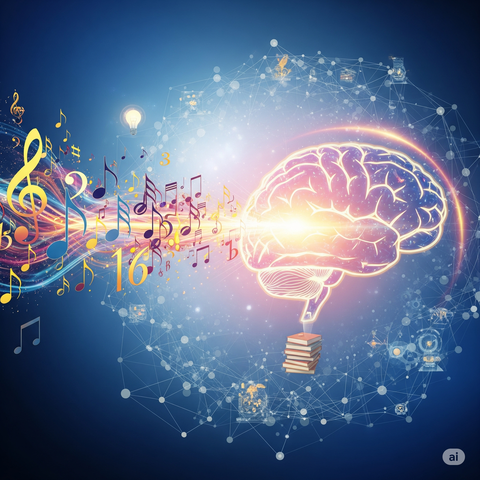
The Rhythm of the Mind: How Music Shapes Our Cognitive World
音楽が私たちの気分や記憶に与える影響は計り知れません。この記事では、音楽が単なる娯楽ではなく、私たちの思考、学習、記憶といった認知能力に直接作用する深遠なツールであることを、最新の研究を交えて探ります。
Music is a powerful force, one that can change our mood in an instant or even bring back a long-forgotten memory. But what if its influence went deeper? What if the melodies we love were actively shaping our minds? A growing body of research shows that music is far more than just a form of entertainment; it is a profound tool that directly influences our cognition, which refers to our ability to think, learn, and remember.
A neuroscientist's lab offers a window into how music affects the brain. Researchers have documented how a person's brainwaves, which are patterns of electrical activity, can change in response to sound. A fast, intense song might cause brainwaves to speed up, increasing a listener’s alertness. In contrast, a calm classical piece could slow those same waves down, helping someone feel more relaxed and ready for sleep.
Scientists at one research center conducted a study where they had students listen to an upbeat classical piece before taking a math test. The data showed that the students' alpha waves — associated with a calm, focused state — increased. The result? They showed a small but measurable improvement in their scores. This is a fascinating, real-world example of the so-called "Mozart effect" in action.
The power of music goes beyond the classroom; it's also found in hospitals. Music therapists use sound to help patients manage stress and anxiety, improve their mood, and even cope with pain. One therapist shared a story about a patient who was feeling anxious and disconnected after an accident. The therapist started by introducing a simple rhythm, which the patient could tap their fingers to. Over time, they moved on to songs from the patient’s youth. The moment the patient's favorite song from the 70s began to play, their entire face changed. The sadness and fear seemed to disappear, even if only for a little while. This is because music stimulates the release of dopamine, a chemical in the brain linked to pleasure and motivation. This is why a song can be a powerful emotional tool, helping people manage feelings of pain, fear, and loneliness.
The influence of music extends to our creative abilities as well. Many of the world's most celebrated artists, writers, and designers have relied on music for inspiration. A young app designer, for instance, once explained that he couldn't work without instrumental hip-hop playing in the background. "When I get stuck on a problem, I don't try to force it," he said. "I just listen to the music. The rhythm and the melody help me see the problem in a new way, and the solution often just appears in my head." His experience is not unique. Many creative professionals rely on music to enter a state of deep concentration and unlock their creativity.
From the science lab to the hospital room and the creative studio, the message is clear. Music is a silent partner in our daily lives, a powerful force that shapes our thinking and our emotions. It's a tool that can calm, heal, and inspire. The next time you put on your favorite song, remember that you're doing more than just listening; you're engaging in a powerful conversation with your own mind.