
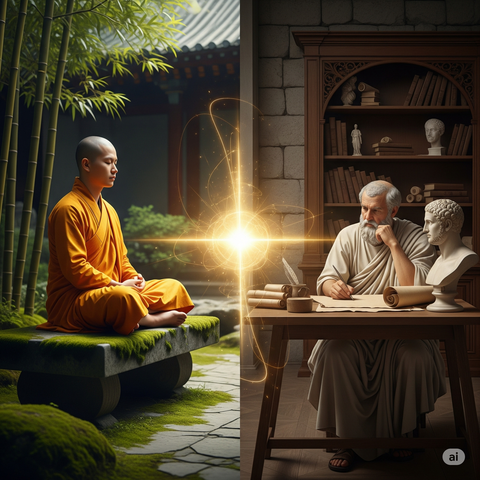
The Philosophy of Happiness: East Meets West
幸福を追求する東洋の仏教と西洋のストア派哲学は、異なるアプローチを取りながらも共通の結論に至っています。どちらも、幸福は外的な出来事ではなく、自分自身の心のあり方、つまり物事への反応や考え方によって決まると教えています。
For centuries, people across the world have explored the question of how to live a happy life. While the answers have been different depending on the culture, we can find surprising similarities when we compare Eastern and Western philosophies. By looking at ancient schools of thought like Buddhism from the East and Stoicism from the West, we can see that true well-being may depend less on what happens to us and more on how we respond to it.
In Buddhism, the main cause of suffering is believed to be attachment—our desire to hold on to things, people, and feelings. A person who is always wanting more is never truly happy, because there will always be something they don't have. The Buddhist solution is to practice mindfulness, which means being fully aware of the present moment without judging it. By accepting things as they are, without trying to change them, we can find peace. The goal is to let go of our desires and expectations, understanding that everything in life is temporary. When a person realizes that suffering is a natural part of life and learns to accept it, they can find a deeper sense of happiness.
On the other side of the world, ancient Greek and Roman philosophers developed Stoicism. This philosophy also seeks to help people find happiness, but its approach is a bit different. Stoics believed that true happiness comes from living a life of virtue and wisdom. They taught that we should not worry about things we cannot control, such as the weather, other people's actions, or our own bad luck. Instead, we should focus all our energy on what we can control: our own thoughts and actions. For example, a Stoic person would not be upset by a rainstorm that ruined their plans, because they know they cannot control the weather. They would, however, focus on how they chose to react to the situation. By controlling their own reactions, they could remain calm and happy.
While one philosophy talks about "letting go" and the other about "controlling what we can," they both arrive at a similar conclusion. Both Buddhism and Stoicism teach that lasting happiness does not come from the outside world. It comes from inside ourselves. They show us that our inner peace depends on our mindset, not on our material possessions or our circumstances. By practicing mindfulness and focusing on what is within our power, we can learn to accept life's challenges with a sense of calm. This shared wisdom, which has lasted for thousands of years, reminds us that the best way to find happiness is to look within.