
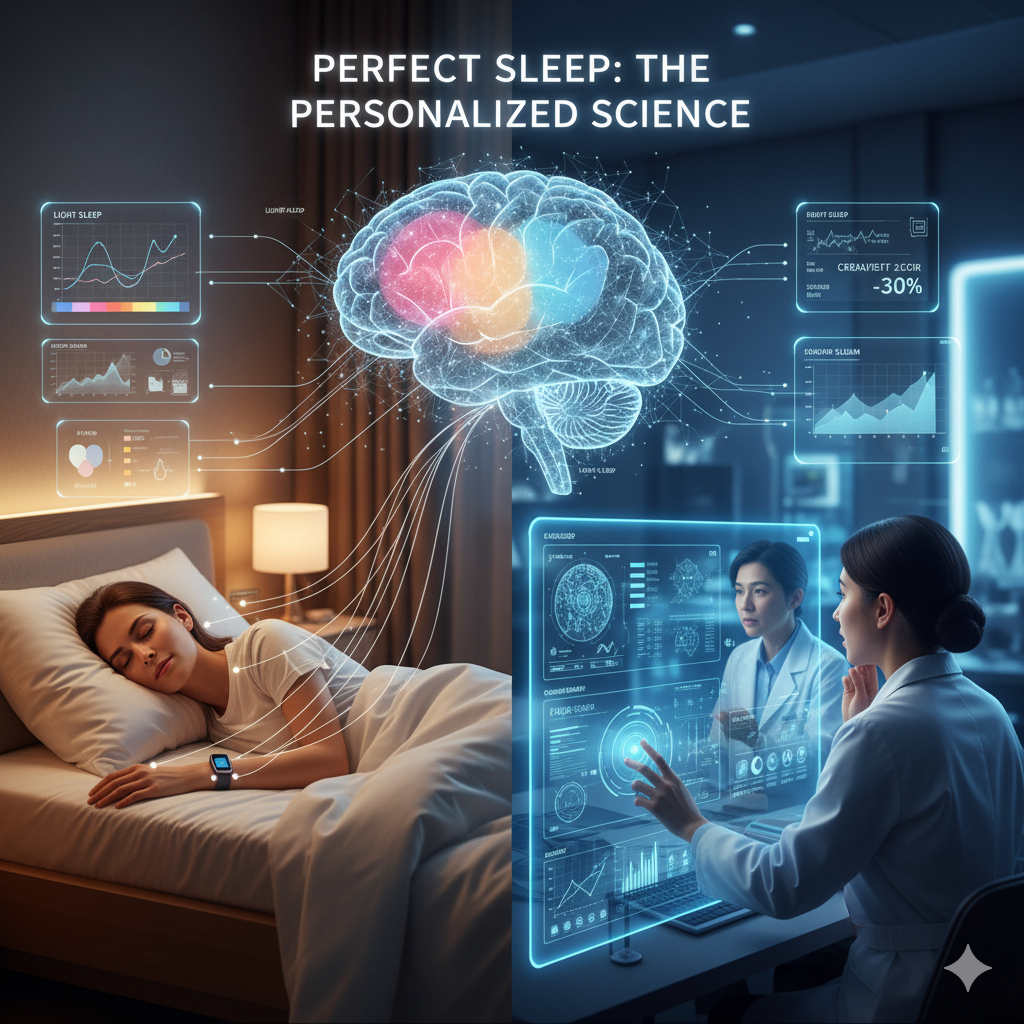
Defining "Perfect Sleep": How Wearable Technology Is Charting a New Frontier in Wellness
ウェアラブルデバイスで睡眠と日中のパフォーマンスを関連付ける研究では、研究者と参加者双方の視点から、主観的な感覚と客観的な能力のギャップが明らかにされ、個人に最適化された睡眠改善への道が拓かれつつあります。
現在、この長文の音声は準備中です。
The long-standing prescription of eight hours of nightly rest has been a cornerstone of public health advice for decades. However, this one-size-fits-all approach is now being fundamentally challenged by a technological revolution in personal wellness. The ubiquitous nature of wearable devices, such as smartwatches and fitness trackers, has opened the door to a new field of inquiry: the scientific determination of what constitutes "perfect sleep" on an individual basis. This research is moving beyond generic advice to provide data-driven, personalized insights into our most restorative biological process.
At the heart of this new approach is the collection of highly granular physiological data. In ongoing studies, participants are equipped with wearable sensors that monitor a suite of biometric markers throughout the night. These include not only basic metrics like heart rate and body movement but also more sophisticated data points such as heart rate variability (HRV), respiratory rate, and skin temperature. By continuously recording these variables, the devices can accurately delineate sleep stages—light, deep, and REM—providing an unprecedentedly detailed picture of an individual's sleep architecture. This objective data stream represents a significant leap forward from traditional reliance on subjective self-reporting, which can often be imprecise.
The core innovation of these experiments, however, lies in correlating this nocturnal data with diurnal performance and well-being. Researchers are systematically juxtaposing the sleep metrics with a wide array of daytime assessments. These include cognitive function tests that measure reaction time and memory recall, evaluations of physical performance, and psychometric surveys that gauge mood, energy levels, and perceived stress. The central hypothesis is that by analyzing these two data sets in tandem, specific patterns in sleep quality and duration can be directly linked to optimal daytime functioning for each person.
To illustrate the power of this correlational analysis, insights from researchers on the front lines are particularly revealing. "We had a participant, a graphic designer, who insisted she felt fully functional on just six hours of sleep," explains Dr. Kenji Tanaka, a lead researcher in a recent study. "Her subjective reports were consistent, but our data uncovered a crucial link: on days following nights where her REM sleep fell below 90 minutes, her scores on standardized creativity and divergent thinking tests dropped by over 30%." The participant herself, identified for the study as Emi, expressed astonishment. "I was initially skeptical when Dr. Tanaka showed me the charts," she recounted. "To see my creative output objectively diminished on days I subjectively felt fine was a revelation. It made me realize that 'feeling rested' and 'being at my cognitive peak' were two very different things."
Dr. Tanaka elaborates on this point: "Emi's case is a powerful example of how wearable data can unmask critical performance deficits that self-perception alone cannot detect. Her experience is not unique; many high-performing individuals unknowingly operate at a suboptimal level due to chronic, specific sleep stage deficiencies." Despite its immense potential, he acknowledges significant hurdles. The primary challenge is distinguishing correlation from causation, and filtering out confounding variables—what he calls "life noise." The ultimate goal, he notes, is to create dynamic feedback systems, moving from passive monitoring to proactive intervention, perhaps by suggesting precise adjustments to a user's diet or light exposure to optimize the coming night's rest.
The ultimate objective of this research, therefore, is to formulate bespoke sleep recommendations. The data may reveal that one individual's mood is intrinsically linked to their deep sleep duration, while another's athletic recovery hinges on minimizing sleep interruptions. Consequently, this allows for targeted interventions, such as adjusting bedtimes, modifying pre-sleep routines, or altering daily exercise timing to enhance specific sleep phases. This is where the true power of personalized sleep science lies: empowering individuals with actionable intelligence to manage their own well-being with a new level of precision.
In essence, this research signifies a paradigm shift from a generalized understanding of sleep to a precisely calibrated, personalized science. It promises a future where the elusive concept of a "perfect night's sleep" is no longer a matter of guesswork, but a scientifically achievable reality tailored to the unique biology of every individual.