
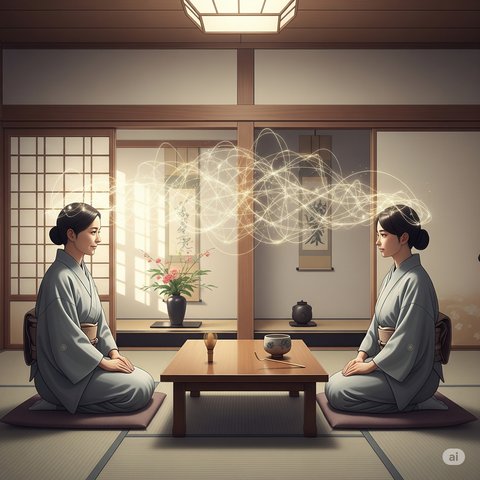
The Art of Silence: Understanding Non-Verbal Communication in Japanese Culture
日本では沈黙は無作法ではなく、非言語的なコミュニケーションを重視する文化の一部です。「以心伝心」や場の空気を読むことで、直接的な言葉を避けながらも、調和を保ちつつ深い理解を共有しています。
In many cultures, communication is a fast-paced exchange of words, opinions, and feelings. We often believe that a person who speaks a lot is a confident and capable communicator. However, in Japan, a different kind of communication is often valued more highly: the art of silence. This focus on non-verbal cues, unspoken understanding, and the power of quiet moments is a deeply ingrained part of Japanese culture, reflecting core values like harmony and mindfulness.
In Western societies, silence can feel awkward or even rude. We're trained to fill empty spaces in a conversation. Yet, in Japan, silence is not necessarily a void to be filled. Instead, it's an important part of the conversation itself. This practice is closely connected to the concept of ishin-denshin, a term that literally means "what the mind thinks, the heart transmits." It's the idea of a shared, unspoken understanding between people. You see this in daily life: a quiet nod, a gentle expression, or a moment of shared silence can convey deep respect and agreement. Because of this, Japanese people are often very skilled at reading the atmosphere, or kūki, of a room to understand what is truly being communicated.
This focus on silence is driven by the cultural priority of maintaining harmony (wa). Rather than speaking their minds directly and risking conflict, people often choose to be indirect. This can be seen in business meetings, where decisions are often made before the formal meeting, allowing everyone to show agreement without open debate. For someone who is not used to this, it can be confusing. They might think that their Japanese colleagues are being shy or unassertive, when in fact, they are simply using a different, more subtle way of communicating. This subtle approach helps avoid conflict and ensures that group harmony is kept intact.
The appreciation for silence is also connected to a deep sense of mindfulness. In Japanese art forms like flower arranging (ikebana) or the tea ceremony (sado), quiet concentration is key. The goal is not just to do an activity but to be fully present in the moment. The silence in these moments allows for deeper appreciation and a greater sense of connection to the process. This idea extends to daily life; taking a moment of silence to reflect before speaking or before making a decision is considered a sign of wisdom and thoughtful consideration. It's a way to slow down in a busy world, allowing for clearer thoughts and more intentional actions.
In a world where loud voices often seem to dominate, the Japanese approach to communication reminds us that true understanding can sometimes be found in what is not said. The art of silence isn't an absence of meaning; it's a rich and meaningful form of expression.