Robots in the Classroom: Friend or Foe?
ロボットやAIの教育現場への導入は、学習効率化や個別支援に役立ちます。しかし、人間関係や社会性の育成に悪影響を及ぼす懸念も。教師の代わりではなく、学習を助けるツールとしての活用が鍵となります。
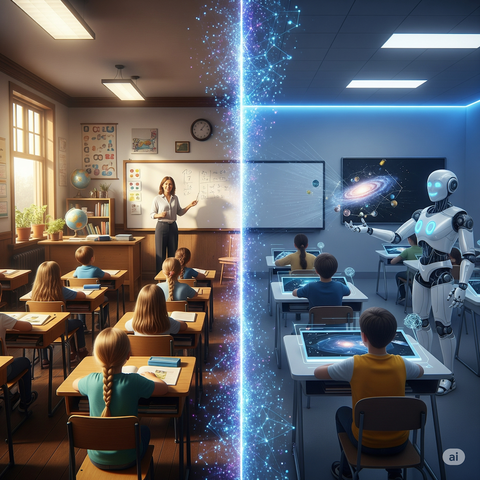
The thought of a robot standing at the front of a classroom might sound like something from a science fiction movie. However, as technology advances, the use of robots and AI in education is becoming a reality. These intelligent machines are beginning to enter schools, raising a fascinating question: are they a helpful friend to teachers and students, or a potential foe to traditional learning? The answer lies in how we balance technology's power with the essential need for human connection.
One of the biggest advantages of using robots in the classroom is their ability to help with repetitive tasks. An AI assistant, for instance, could grade multiple-choice tests, freeing up a teacher's time to focus on what matters most: helping students individually. These robots can also offer a kind of personalized education that is difficult for a human teacher to provide alone. They can remember exactly what a student has learned and what they're struggling with, creating lessons that fit each student's needs. For a student who is shy, a robot might be a patient, non-judgmental tutor, repeating a lesson as many times as needed until the student understands it. This ability to adapt makes learning more efficient and effective for everyone.
However, the increasing use of robots also brings up serious ethical concerns. One major worry is the effect on human interaction. Education is not just about learning facts; it is also about developing social skills. In a classroom, students learn how to work with others, to solve problems together, and to understand different viewpoints. What would happen if a robot took the place of a teacher or a classmate? Would students lose the chance to develop these important social and emotional skills? Some experts worry that relying too much on AI could make students less creative and less able to think critically, as they might just follow the instructions of the robot without questioning them.
The key to this issue is not to see robots as a replacement for human teachers, but as a tool to help them. A robot could be used to help with tasks like language practice or math drills, allowing the teacher to spend more time on discussions, projects, and creative activities. The true power of education comes from the relationship between a teacher and a student—the encouragement, the guidance, and the shared excitement of discovery. A robot cannot replace the empathy of a teacher who can see when a student is having a bad day, or the teamwork that happens when students work together on a group project. By finding the right balance between technology and human guidance, we can make sure that robots are a valuable friend in the classroom, not a silent enemy.